
Why most marketing fails is a lot like being at a party and meeting new people.
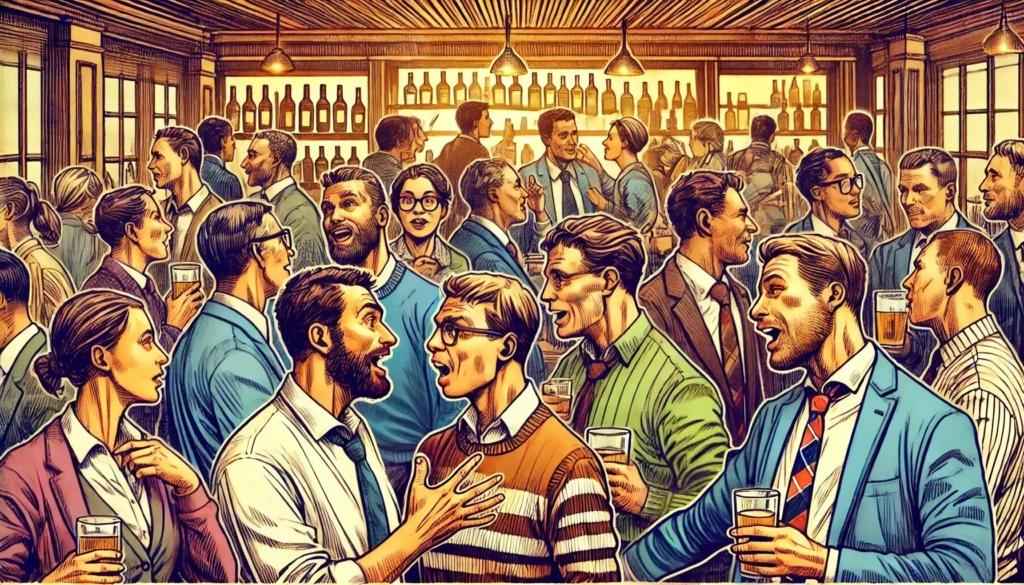
Some people are easy to talk to. The conversation flows. You laugh, exchange stories, and suddenly twenty minutes have passed without you noticing.
Other conversations are just fine — a little small talk, light smiles, and then you both drift off to refill your drinks.
And then there’s that person. The one who only talks about themselves.
Their job, their achievements, their car, their latest purchase — you name it — and never once ask a single question about you.
After a while, you find yourself nodding politely while scanning the room for snacks, the bathroom, or literally any possible escape route.
Unfortunately, most company messaging sounds exactly like that person. And this is exactly why most marketing fails.
Why Most Marketing Fails: The “Me, Me, Me” Problem
A lot of businesses fall into the same trap.
They focus on what they have built.
Their product.
Their features.
Their technology.
Their innovation.
And to be fair, it makes sense.
If you’ve spent months — or years — developing something, you’re proud of it. You want people to know how fast it is, how durable it is, how advanced it is.
Maybe your product really is better than the competition.
It runs faster.
It handles more data.
It includes functions nobody else offers.
And all of that might be true.
But here’s the problem:
Customers don’t fall in love with features.
They care about what those features do for them.
Most people aren’t thinking:
“I hope this product has the highest data speed on the market.”
They’re thinking:
“Will this make my life easier?”
“Will this save me time?”
“Will this solve my problem?”
Features describe the product.
Stories describe the result.
And results are what people actually buy.
And this matters whether you’re running a company — or just trying to land your first freelance client or grow a side hustle.
Features Speak to the Brain. Stories Speak to the Heart.
Features are rational.
They appeal to the analytical part of the brain.
Speed. Capacity. Durability. Performance numbers. Technical improvements.
And yes — those things matter.
But they’re rarely what make someone actually decide to buy.
Because most decisions aren’t purely rational.
They’re emotional first — and rationalized afterwards.
Stories work differently.
Stories make us feel something.
And feelings are far more powerful than technical specifications.
A powerful example is “Moments,” Volvo’s commercial for the then-new XC60.
The film shows a young girl on her way to her first day of school. Breakfast at home. A hug from her parent. A future full of possibilities just beginning.
At the same time, a driver is rushing to work. Late. Distracted. Stressed. She looks away for a second.
The child steps into the street.
A collision seems inevitable.
But the car brakes automatically.
Disaster avoided.
The ad barely talks about technology. Instead, it shows what the technology protects: a child’s future, a family’s entire world, everything that could have been lost.
And suddenly the feature isn’t just a feature anymore.
It’s peace of mind.
It’s relief.
It’s the difference between tragedy and safety.
And that is what people actually connect with.
Storytelling Starts With Listening
Good storytelling in marketing works like good conversation.
You don’t start by talking.
You start by listening.
You try to understand:
- What does this person struggle with?
- What do they want to achieve?
- What problem are they trying to solve?
In great marketing stories, the customer is the main character, not the company.
Your business plays a different role.
You’re the guide. The one who helps the hero succeed.
Building in Public Is Storytelling Too
This is also why I share the journey behind Hamster Wheel Exit and The ExitLab.
Not because the projects themselves are special.
But because many people are trying to build something on the side, test ideas, and slowly create more freedom in their lives.
The story matters more than the tools.
And your story matters more than your product features.
The Core Idea of Story Driven Marketing
If you remember one thing, let it be this:
Stop making your business the hero.
Make your customer the hero.
Talk about their journey.
Their obstacles.
Their wins.
And show how you help them move forward.
That’s where marketing starts to feel less like selling…
…and more like helping.

Coming Next
In future posts in this category, we’ll look at:
- Simple storytelling frameworks for businesses
- How to turn customer problems into stories
- How to use storytelling in social media and newsletters
- And how even small businesses can use story to stand out
Because in the end, marketing isn’t really about marketing.
People don’t buy products.
They buy stories they see themselves in.