
Most people don’t procrastinate because they’re lazy.
They procrastinate because the first step feels too big, a feeling many people recognize when they feel stuck in life.
The task is unclear.
The expectations in their head are too high.
The blank page just stares back.
It’s not a motivation problem.
It’s friction.
“I don’t need inspiration,” you think.
“I just need a place to start.”
That’s where practical AI actually comes in.
What Falling Behind Really Means
A lot of people say that if you don’t use AI, you’ll fall behind.
That framing misses the point.
It’s not about falling behind in the broad sense.
And it’s not really about intelligence, either.
AI doesn’t magically make you smarter.
And it doesn’t automatically make you worse.
What it does—very consistently—is make starting easier.
It lowers the resistance between thought and action.
It reduces the mental weight of getting going.
Used this way, AI isn’t a shortcut.
It’s a threshold-lowering tool.
The Dreaded Blank Page
One of the hardest parts of any kind of work—writing, planning, building something new—is the empty beginning.
The blank page.
The open document.
The vague idea that hasn’t found a shape yet.
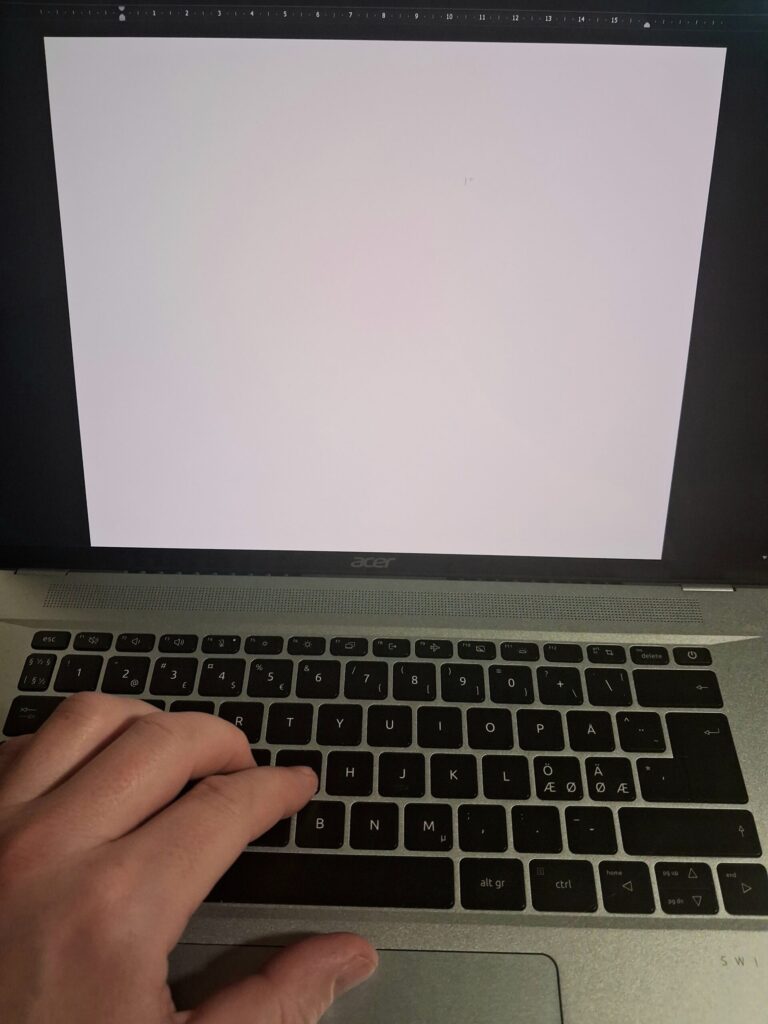
AI helps by:
- breaking things down
- removing the panic of the empty page
- creating something to react to
- lowering the pressure to get everything right immediately
That pressure is often what causes procrastination in the first place.
When the bar feels too high, we freeze.
When the first step feels smaller, we move.
AI doesn’t remove the work.
It makes the beginning lighter.
Specific Questions Create Momentum
In practice, this isn’t about perfect prompts or polished output.
It’s about the kind of questions you ask.
Instead of asking for finished results, you ask for movement.
- “Give me a rough structure, not the final text.”
- “What’s the smallest next step here?”
- “Help me get unstuck, not done.”
- “What would you improve in this text?”
- “How would this sound if it were written for a completely different audience?”
What matters here isn’t asking once—it’s asking again.
AI tends to work best when you become more specific over time.
You narrow the questions, push back, reframe, ask from new angles—almost like painting it into a corner.
The answers become clearer not because AI is smarter, but because the thinking becomes sharper.
This is how practical AI becomes useful:
not as a replacement for thinking, but as a way to think with something instead of alone.
Deciding What Matters
AI doesn’t remove responsibility from the work.
It changes what kind of work remains.
You can lean on it heavily and let it produce drafts, ideas, even full texts—but the more you do, the more your own voice tends to fade.
Used deliberately, the role shifts instead.
From doing everything yourself to acting as an editor, a commissioner—someone who evaluates, adjusts, rejects, and refines.
The same pattern shows up in other fields.
In design, AI can straighten lines, clean up shapes, or adjust colors—removing mechanical friction while leaving creative judgment intact.
The work doesn’t disappear.
What remains human is deciding what matters.
Input Isn’t Instructions
For me, one of the biggest benefits isn’t speed or productivity.
It’s that I’m no longer alone in my own head.
I still do my own thing, regardless of the input I get.
I don’t paint by numbers.
I don’t follow suggestions just because they’re suggested.
That’s always been true, whether feedback comes from other people or from AI. Input becomes material to think with, not instructions to copy. The result isn’t a carbon copy—it’s usually something new that grows out of both perspectives. One plus one often becomes something closer to three.
AI gives input—not decisions.
What changes is that I can reason in real time with another voice.
I can test ideas, explore alternatives, and move forward without spending days circling the same thoughts.
The thinking speeds up.
The responsibility stays.

Practical AI, Used Deliberately
Used the lazy way, AI can flatten your voice and weaken your autonomy.
Used deliberately, it does the opposite.
It strengthens your thinking, sharpens your judgment, and increases your ability to move.
That’s the real advantage of practical AI.
Not output.
Not intelligence.
But the simple fact that starting no longer feels like the hardest part.